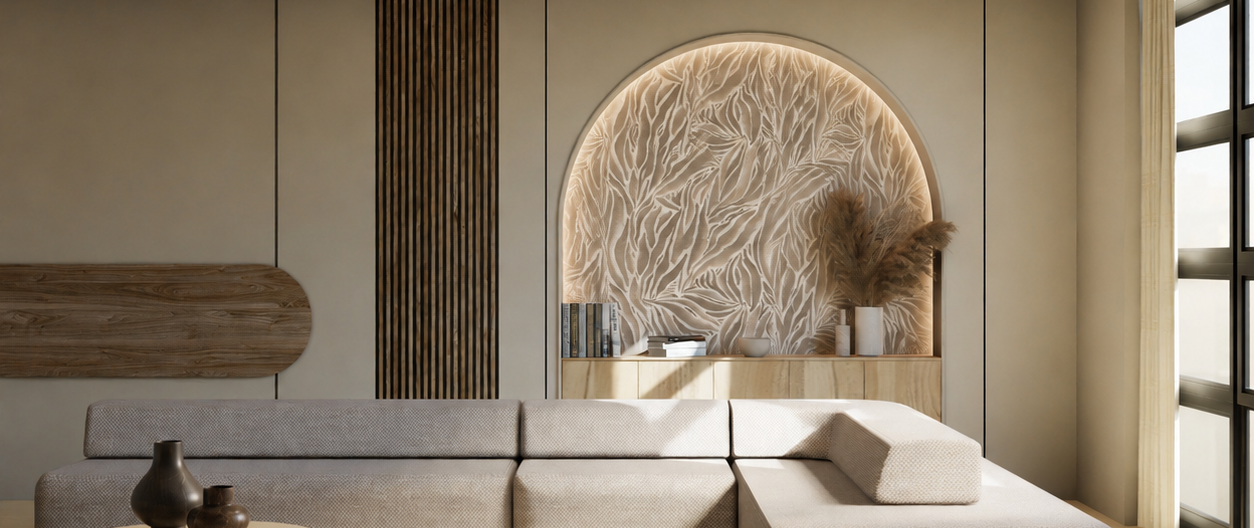

Nature inspired wallcoverings are becoming a meaningful part of whole home design as homeowners look for interiors that feel calmer, more personal, and more connected to the natural world. The wall has always helped define a room, but today it can shape more than color or pattern. It can influence how the home feels.
Across residential design, wellness has become less about one specific look and more about how a home supports daily life. Surfaces play a meaningful role in that shift, shaping how a room feels through texture, movement, color, and material character.
For designers, nature can enter a home through many forms. It may appear as a mural with soft movement, a floral wallcovering with quiet pattern, or a dimensional surface inspired by stone, wood, or tile. Through custom murals, decorative wallcoverings, and Dimense wallcoverings, Leftbank Art helps designers build that natural influence into the home with more control over scale, color, texture, and mood.
The Home as a Restorative Space
The home now carries more responsibility. People use it to rest, gather, work, host, retreat, and reset. Because of that, designers often consider how a room feels in daily life, not only how it appears in a photograph.
Nature inspired wallcoverings can bring a more layered feeling to that experience. Surfaces with movement keep quiet rooms from feeling flat, while textures inspired by stone, tile, wood, or woven materials add character without requiring major construction. When used with care, these finishes create rooms that feel considered while still giving furniture, art, and light room to breathe.
They can also help designers manage budget and installation needs. A wallcovering can suggest the look of natural materials without the weight, labor, or higher cost that traditional stone, tile, or wood applications may require. That flexibility matters in whole home design, where every room needs its own expression while still belonging to the larger story.
Nature Inspired Wallcoverings Beyond Botanicals
Nature does not need to appear as a literal garden scene. Leaves and florals have their place, but the natural world can also come through mineral tones, weathered textures, soft striations, organic marks, and surfaces that shift with light.
In whole home design, nature-inspired interiors work best when they feel layered rather than themed. The connection can come through material references, surface texture, organic movement, and the way light interacts with a room.
That perspective gives designers more room to explore. A nature inspired interior can feel calm, sculptural, textural, or atmospheric without becoming themed. The connection may come from a surface that feels handmade, a tonal pattern that moves quietly across a wall, or a dimensional finish that brings architectural depth into the room.
Custom Murals Sized to the Room
Murals can shift the atmosphere of a room because they bring scale, artwork, and movement to the wall. In a home, that scale matters. A mural should feel connected to the architecture rather than placed on top of it.
Custom capabilities make that possible. Artwork can be sized to fit the wall, adjusted to support the palette, and refined so the composition works with windows, ceiling height, furniture placement, and the natural flow of the room.
This level of control helps a mural feel integrated from the start. It becomes part of the home’s design language, not just a decorative layer added at the end.
Wallcovering With a Softer Role in the Home
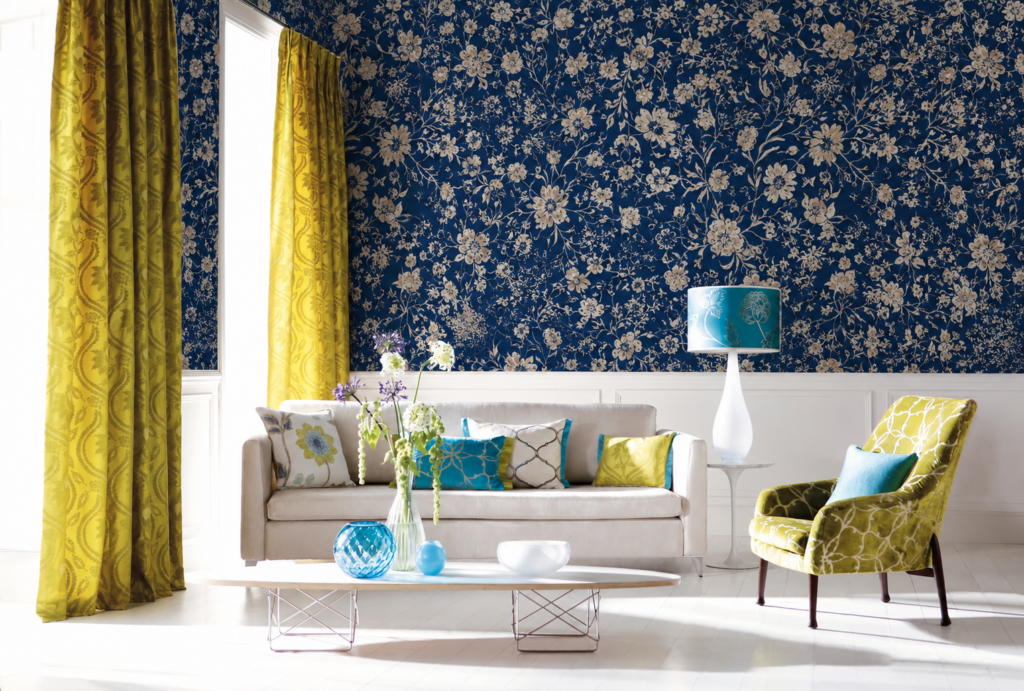
Wallcovering can bring a softer layer into the home through floral artwork, tonal botanicals, and textured surfaces that offer more depth than paint alone. It gives designers a way to create atmosphere without changing the architecture, especially in spaces where a subtle shift in pattern, scale, or surface can make the room feel more complete.
In whole home design, wallcovering often works best when it creates a quiet relationship from one room to the next. The pattern does not need to repeat everywhere. Instead, color, movement, scale, or material character can carry the connection.
Custom wallcovering gives designers more control over those choices. Pattern scale can shift for the room. Color can move softer, deeper, warmer, or cooler. Artwork can also be adapted so the surface feels specific to the project rather than selected from a standard option.
Dimense as an Architectural Surface
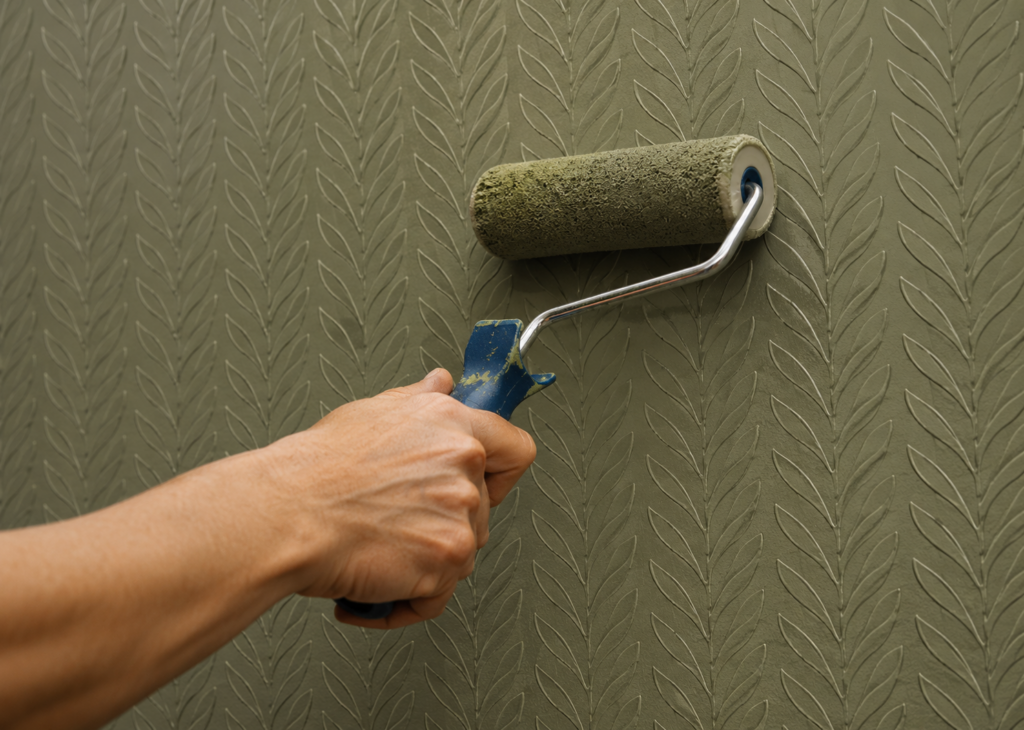
Dimense adds a tactile layer to nature inspired wallcoverings. Its raised detail creates depth, shadow, and movement, which allows floral, organic, and material-inspired patterns to feel more dimensional in the room.
For residential interiors, Dimense can also echo architectural materials such as stone, wood, and tile. Designers can bring that type of surface detail into the home without the cost, weight, or installation demands those materials can require. The result feels dimensional and refined, with texture that can shift the mood of a room without adding heavy construction or unnecessary visual weight.
This makes Dimense especially useful when a project calls for an elevated surface but needs more flexibility than traditional material applications allow. It gives the wall a stronger sense of materiality while keeping the final design adaptable, polished, and tailored to the space.
Custom Capabilities That Support the Whole Home
Whole home design often depends on small adjustments that make the final space feel more resolved, from shifting a color slightly warmer to scaling a mural around a window, ceiling height, or room layout. With custom capabilities, each surface can be refined so it supports the home’s palette, architecture, and overall design direction.
Leftbank Art can help designers shape murals, wallcoverings, and Dimense surfaces around the needs of the project. A floral direction can become softer. A material-inspired surface can feel more architectural. A mural can expand, crop, or shift so the artwork fits the room with greater ease.
That flexibility gives designers more control from the beginning. Instead of building the home around fixed options, they can develop the surface around the home.